01 Dec 2025
upd: 01 Dec 2025
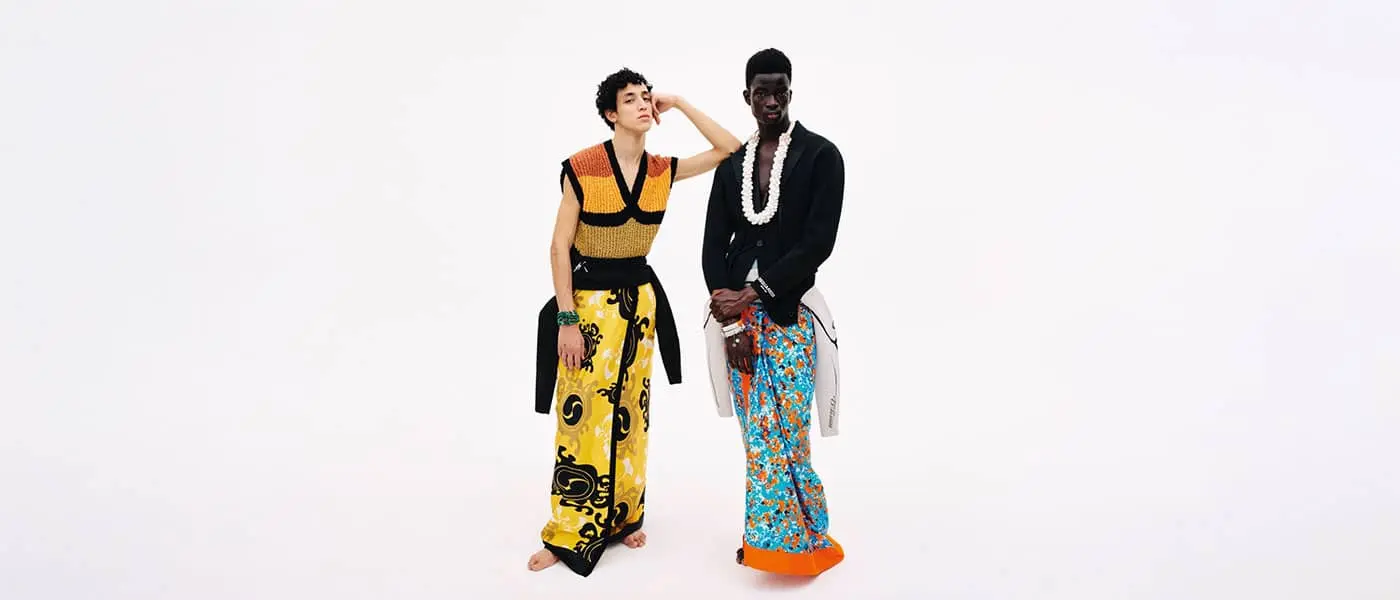
How casting can make or break a show, and some words of wisdom from casting director Arianna Pradarelli
When Alessandro Michele released Aria, the fashion film for Gucci’s centennial in 2021, what struck me the most wasn’t the overload of logos, Gucci and Balenciaga layered onto boots and bags, chokers and septum rings. It wasn’t even the two replicas of Gwyneth Paltrow’s 1996 MTV Video Music Awards velvet Tom Ford-era suit, though that did catch my eye; or the phenomenal soundtrack, bragging about the brand’s omnipresence in popular culture. What stayed with me was the casting.
Michele had built a legacy at Gucci by casting outcasts. Geeky faces, long necks, eyes that are too far apart from each other, big foreheads, ultra thin eyebrows. His casting became as much a signature as his Wes Anderson-meets-Lord of the Rings aesthetic. Demna Gvasalia at Balenciaga, on the other hand, created a completely different visual language, defined by angular features, ice cold stares, blunt bangs. His shows often looked like a crowd evacuating a bunker in some fashion-fueled dystopia in a post soviet nation.
So when Michele tried to merge these two worlds into a single show, it should have felt like a collision. And at first, it didn’t make sense, as it was neither Gucci nor Balenciaga. It was so bland compared to what came to be expected from the two Kering-owned houses. But the more I sat with it, the more it reminded me that casting is never just about who walks. It’s about what the brand is trying to say through those dressed bodies.
In this case, the message seemed to be: yes, Michele’s Gucci is nerdy and odd and self-aware, but we’re not pretending it has always been this way. For the 100-year anniversary, maybe we show you the prettiest girl in your high school walking the runway, a fresh beauty splashing cologne on before going out to the club to break your heart. That will get you through this logomania madness.
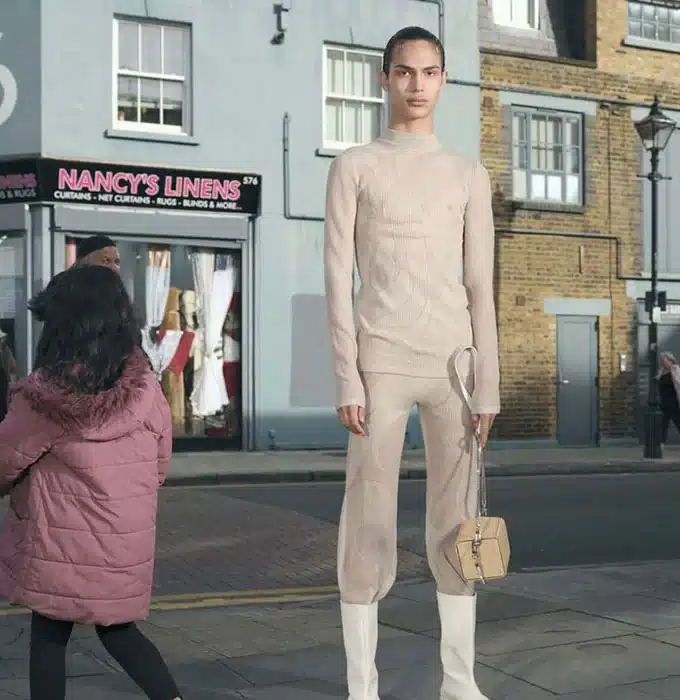
The tension between image and identity in casting art
That tension between image and identity was central to our conversation with casting director Arianna Pradarelli, who visited Istituto Marangoni Miami earlier this month. Known for her work with Prada, Loewe, Amiri, and Feng Chen Wang, and her time as a casting contributor for The New York Times T Magazine, Pradarelli is someone who understands casting not as a logistical step but as a storytelling tool.
Originally from a small town outside Milan, Pradarelli described her path as accidental. She didn’t study casting -at the time, the job title didn’t even exist in Italy. After dropping out of her public relations program, she took an internship at Calvin Klein. It was during that time that she wandered outside for a break and saw a casting director working with models in the courtyard. Something clicked.
“I saw these girls, and I started making up stories in my head. She’s from the Dominican Republic, maybe she has a little brother, maybe she wants to be a nurse,” she said.“That moment made me realize I didn’t want to be a designer or a stylist. I wanted to do casting.”
She kept googling “casting director jobs in Milan” and came up empty, until she finally found her way into a production company, where casting took place. There, she learned the technical side of shows, the choreography, the lighting, the headset cues. Eventually she moved to New York, where she began working under John Pfeiffer, one of the first people in the US to be credited solely as a casting director.
“I’m so grateful to John. He taught me how to do this work with grace and humanity. That’s something I always try to bring into the room,” she said. “You’re often working with people who are 16, 17 years old. They come to a big city, they don’t know the language, they’re scared, and no one explains anything. I’ve always made it a point to be the person who takes a few minutes to say, ‘Here’s what’s going to happen next.’”
Pradarelli is known in the industry for having a sharp eye, but what she values most is not polish. It’s presence. “I always say, there has to be magnetism,” she explained. “You can see 500 models in a day, and then one walks in and you just drop your pen. You feel it. You don’t even know why.”Her advice to students, especially those trying to build their own brands, was to stop looking around. “There’s a quote from Miuccia Prada that I love: ‘Never look at other people’s work,’” she said. “Especially now, when everything is in your face all the time, shut off your phone and go take a walk. You can’t hear your own voice if it’s drowned out by everyone else’s.”
Just like fashion, casting has its own trends, along with buzzwords that capture the mood of the moment. Part of Arianna’s job is translating what clients actually mean when they ask for things like attitude or personality without offering specifics. Words like “fierce” or “cool” can mean completely different things depending on who’s saying them, which is why, she explained, it’s so important to keep asking questions until you get to the root of what the brand wants to say.
“Sometimes they’ll tell me, ‘She doesn’t have enough attitude.’ And I’ll ask, ‘What does attitude mean to you?’ One client, it turned out, meant personal style, the model off-duty look done right. That took three seasons to figure out.”
In a particularly revealing moment, a student asked how to maintain brand identity when so much content looks the same.
“It goes back to instinct,” Arianna said. “Your instinct is your best tool. If you stay true to your point of view, you’ll develop a casting style too. And that becomes part of the brand.”
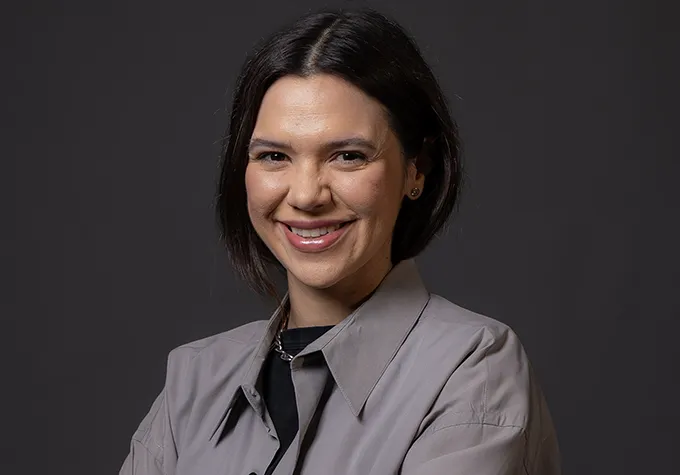
Written by: Sofía Agostini – Fashion Business Professor.
Independent fashion journalist and adjunct faculty professor at Istituto Marangoni Miami.
She teaches Research Methods at the Master’s level, and Fashion Criticism & Digital Writing in the Introduction to Styling course.
“When Alessandro Michele released Aria, Gucci’s centennial fashion film in 2021, what struck me most wasn’t the overload of logos or even the phenomenal soundtrack. What stayed with me was the casting.”
Share with
0 Average rating (0 reviews)