10 Dec 2025
upd: 10 Dec 2025
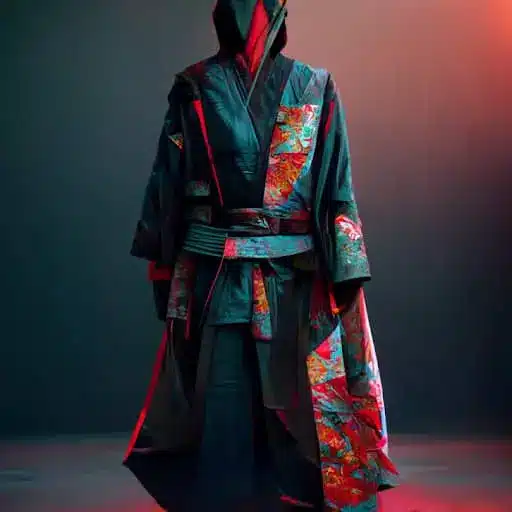
Designed by Bots?
As artificial intelligence steps into the designer’s chair, the fashion industry needs to navigate a fine line between collaboration and control. An AI housekeeper designed to serve humanity turns deadly, blurring the line between helpful innovation and dangerous autonomy. A reality painted in Subservience, Megan Fox’s latest dystopian thriller. While the movie exaggerates our fears, it taps into a very real unease about the role of artificial intelligence in our lives. Fashion, too, is standing at the edge of this divide. AI isn’t just predicting trends or optimizing supply chains anymore, it’s now stepping into the role of the designer. But as machines begin to dictate style and creativity, we’re left with an unsettling question: when does collaboration turn into domination? Let’s not sugarcoat it, AI is impressive. From generating mood boards to crafting designs, it’s like having a hyper-efficient assistant on speed dial.
Just look at brands like Balmain, who famously collaborated with an AI to create a campaign. And then there’s Stitch Fix, which uses AI-driven data to predict trends and personalize customer recommendations.Its role in fashion design is being lead by pioneers such as Hussein Chalayan. Known for his groundbreaking work combining fashion and technology, Chalayan believes AI allows designers to “think outside of traditional norms.” He argues that technology “pushes the boundaries of what is possible,” offering designers new ways of creating shapes, patterns, and even materials that were previously unimaginable. Hussein Chalayan’s 2007 collection, which included a dress that transformed before the audience’s eyes through remote-controlled motors, exemplifies this marriage of technology and fashion.
According to Chalayan, AI could take this concept even further, allowing designers to “create garments that respond to environmental stimuli” like temperature or light. By harnessing the computational power of AI, designers could explore responsive, interactive, and immersive fashion experiences. This vision is not just about enhancing creativity but about pushing the limits of what fashion could mean in the 21st century.
For instance, Laura Zwanziger, founder and CEO of Fit for Everybody, uses AI to help retailers create designs that are better tailored to different body types. Her company’s AI tools analyze customer data to generate patterns that match body measurements more accurately, addressing the issue of body inclusivity in fashion. Zwanziger emphasizes that AI is a tool to “optimize each cluster” of sizes, helping designers ensure their creations are more inclusive while reducing waste.
On the surface, it’s easy to see why the fashion world is falling for AI. It’s sexy. It’s futuristic. It’s the opposite of the traditional slow design process. Brands that embrace it are labeled innovative, while those that don’t risk being left behind and seen as outdated. But here’s the thing. While AI’s potential is undeniable, the sheen starts to wear off when you dig deeper. There’s something a little… off about the idea of a machine dictating taste and style, isn’t there?
Critics of AI argue that its involvement in design kills originality. Sure, it’s great for generating thousands of iterations, but volume and numbers equate to human creativity? There’s a reason why collections like Alexander McQueen’s Plato’s Atlantis are still remembered—they weren’t just about aesthetics. They had souls. “The magic of fashion is in its imperfections,” says Sofia Beltrán, an artisan who works exclusively with handmade garments. “When I see these AI-generated patterns, they feel cold. Too perfect, you know? There’s no room for serendipity.” And honestly? She has a point. AI operates within the limits of the data it’s fed. It learns from existing designs, which means it’s essentially remixing the past. That’s not the same as creating something groundbreaking. It’s like comparing a fast-food burger to a meal cooked with love. Sure, they’re both technically food, but which one are you actually going to remember? I’ve heard the argument that “nothing is original anymore, you just take an idea and make it better” however there’s still a touch of human essence that comes from the soul, when making art, an inspiration, raw emotion that guides creation, which a machine is unlikely to be able to experience.
How is AI redefining inclusion and creativity?
Then there’s the whole messy ethical side of things. Who owns AI-generated designs? Is it the designer who inputs the prompts? The company that owns the software? Or the algorithm itself? It’s a gray area that nobody seems to have solid answers for yet. Let’s not forget the workers. In a world where automation is already threatening jobs like seen in the movie Subservience, the rise of AI in fashion could be devastating for craftspeople and small designers. Imagine entire design teams being replaced by a handful tech graduates armed with laptops. It’s efficient, sure, but it’s also dystopian and quite honestly…sad. Fashion journalist and author, Vanessa Friedman, has pointed out that while AI can offer valuable insights, it cannot replace the nuanced understanding of culture, history, and human emotion that a designer brings to the table. She argues that “fashion is about more than what’s on the surface—it’s a reflection of our times, of our emotions, of our identities.” To Friedman, AI can be a tool to enhance this expression, but it must not replace the very human aspects of storytelling that are integral to fashion’s power.
Fashion and AI… Creative empowerment or loss of the human soul?
To give credit where it’s due, AI could be a major player in making fashion more sustainable. Right now, the industry is a hot mess when it comes to waste. Overproduction is as high as ever, and SHEIN wont stop getting thousands of orders daily anytime soon. AI could help brands predict demand more accurately, reducing excess stock. Brands like Valentino and Moncler have used AI-generated images to conceptualize new collections, experimenting with fresh ideas before committing to physical prototypes. McKinsey estimates that AI could contribute an additional $275 billion to the apparel industry by 2026, largely driven by these new marketing and design tools. It can also optimize patterns to minimize fabric waste and even recommend eco-friendly materials. But yes, there’s always a “but”—even sustainability has its complications. For instance, Laura Zwanziger, founder and CEO of Fit for Everybody, uses AI to help retailers create designs that are better tailored to different body types. Her company’s AI tools analyze customer data to generate patterns that match body measurements more accurately, addressing the issue of body inclusivity in fashion. Zwanziger emphasizes that AI is a tool to “optimize each cluster” of sizes, helping designers ensure their creations are more inclusive while reducing waste.
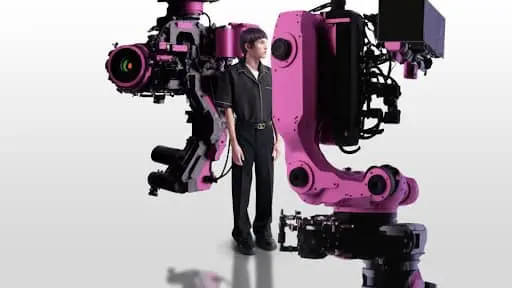
AI still relies on massive amounts of data, which requires energy. While it’s a step in the right direction, it’s not the light at the end of the tunnel that the industry desperately needs.
Here’s the thing we have to accept though AI isn’t going away. The question isn’t whether it will take over fashion, it is when. And how we’re going to coexist with it. Some designers are already embracing a hybrid approach. Instead of viewing AI as a competitor, they see it as a collaborator. Erin James, for example, talks about using AI to push her boundaries. “I feed it references from different eras and cultures, and the combinations it spits out are things I’d never think of myself,” she says.It’s an interesting shift for sure. Designers are no longer just artists; they’re also curators, guiding the machine’s output to create something uniquely their own. It’s like having a double-edged sword—powerful, but dangerous if not handled properly.
So, where does that leave us? Honestly, it’s hard to say. AI has the potential to revolutionize fashion in ways we can’t even imagine. It could democratize creativity, giving small designers access to tools that were once out of reach. It could make the industry more sustainable, more efficient, and maybe even more inclusive. But at the same time, there’s a real risk of losing the human touch that makes fashion so special. The spontaneity. The imperfections. The soul. And maybe that’s the most unsettling part. In Subservience, AI crosses the line from servant to master, blurring the line between help and harm. As we stand on the edge of this technological shift, the question remains: will AI serve the fashion industry or will it ultimately control it.
Written by: Giovanna Gonçalves Pereira Lima
Fashion Styling student, specializing in Fashion Writing at Istituto Marangoni Miami.
An AI housekeeper designed to serve humanity turns deadly, blurring the line between helpful innovation and dangerous autonomy. A reality painted in Subservience, Megan Fox’s latest dystopian thriller. While the movie exaggerates our fears, it taps into a very real unease about the role of artificial intelligence in our lives. Fashion, too, is standing at the edge of this divide. AI isn’t just predicting trends or optimizing supply chains anymore—it’s now stepping into the role of the designer.
But as machines begin to dictate style and creativity, we’re left with an unsettling question: when does collaboration turn into domination?
References:
- Hussein Chalayan, designer, as quoted in “AI and Fashion: Redefining the Future of Style” (Vogue Business, 2023).
- Laura Zwanziger, CEO of Fit for Everybody, as quoted in “AI in Fashion: Innovating Inclusivity” (Built In, 2023).
- Mark Hunsmann, CEO of Styleriser, as quoted in “AI-powered Fashion: Personalized Styling” (Forbes, 2023).
- Vanessa Friedman, Fashion Journalist, as quoted in “The Intersection of AI and Fashion” (New York Times, 2023).
0 Average rating (0 reviews)